By NZART 15 January, 2024
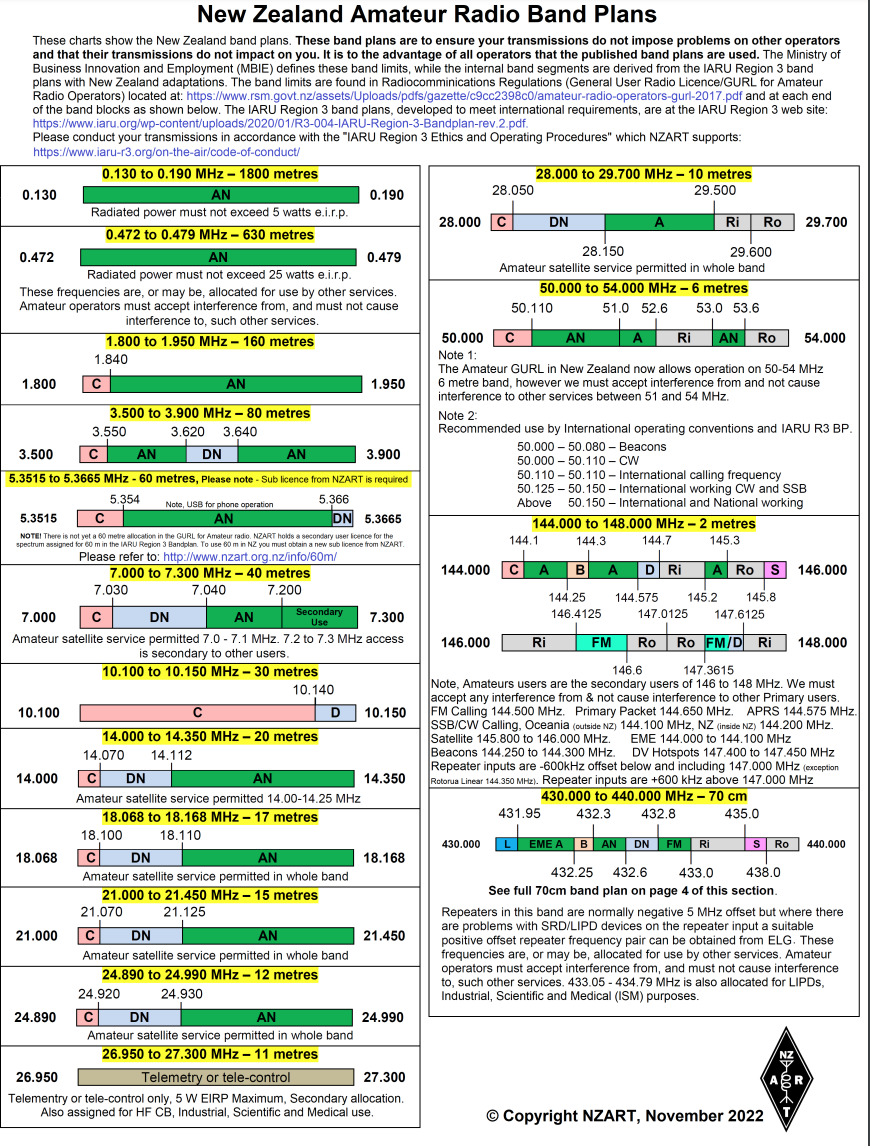
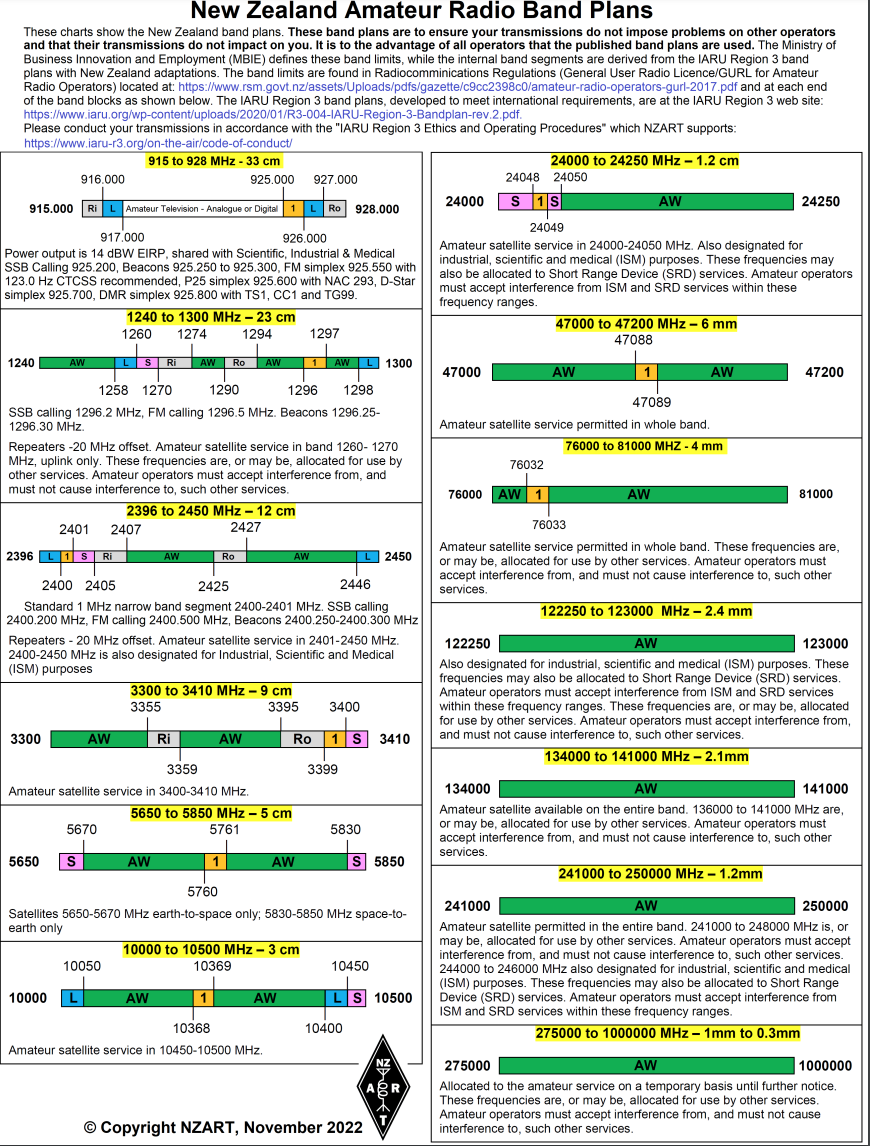
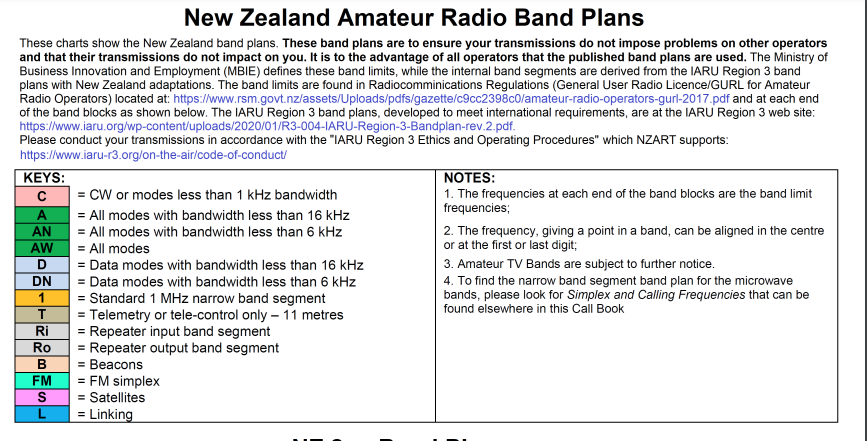
Ham radio band plans are voluntary agreements within the amateur radio community that divide specific frequency bands into smaller segments dedicated to particular types of communication. While national regulators (like the RSM in NZ) set the broad legal boundaries of where hams can operate, band plans provide a more granular “gentleman’s agreement” to ensure order. They specify exactly where different modes such as Morse code (CW), digital data (like FT8), and voice (SSB or FM) should reside within a band to prevent them from overlapping and interfering with one another.
The primary purpose of these plans is to promote spectrum efficiency and mutual respect among operators. Because some modes are “wide” (like high-fidelity voice) and others are “narrow” (like Morse code), putting them in the same spot would result in the stronger signal drowning out the weaker one. By following a band plan, a ham looking for a long-distance digital contact knows exactly which few kilohertz to tune to, while someone wanting a local chat on a repeater knows to stay in the designated FM segments, keeping the airwaves organized and productive for everyone.